
An instrument for reading Dr. Orville Owen’s thousand-foot canvas — and the research program it unlocks. The complete drawings, CAD models, bill of materials, and audit methodology are published below; a few of the illustrations are reproduced as samples. Everything on this page may be freely shared.
The instrument
A purpose-built, non-contact overhead scanner: a camera rides a rolling carriage along two strut-channel rails atop a freestanding, bolt-together gantry, photographing each canvas section from above as it is gently unwound — once, carefully — onto a prepared staging bed. Nothing is cranked through a spooling mechanism; no pressure is ever applied — at most, a clear conservation platen rests on a curling section under its own light weight. The design is governed throughout by the conservation constraints described in Dr. Carla Groenewegen’s article “Dr Orville Owen’s Cipher Wheel: Past, Present and Future” (Baconiana, Vol. 1, No. 6, June 2017).


Complete drawings & models
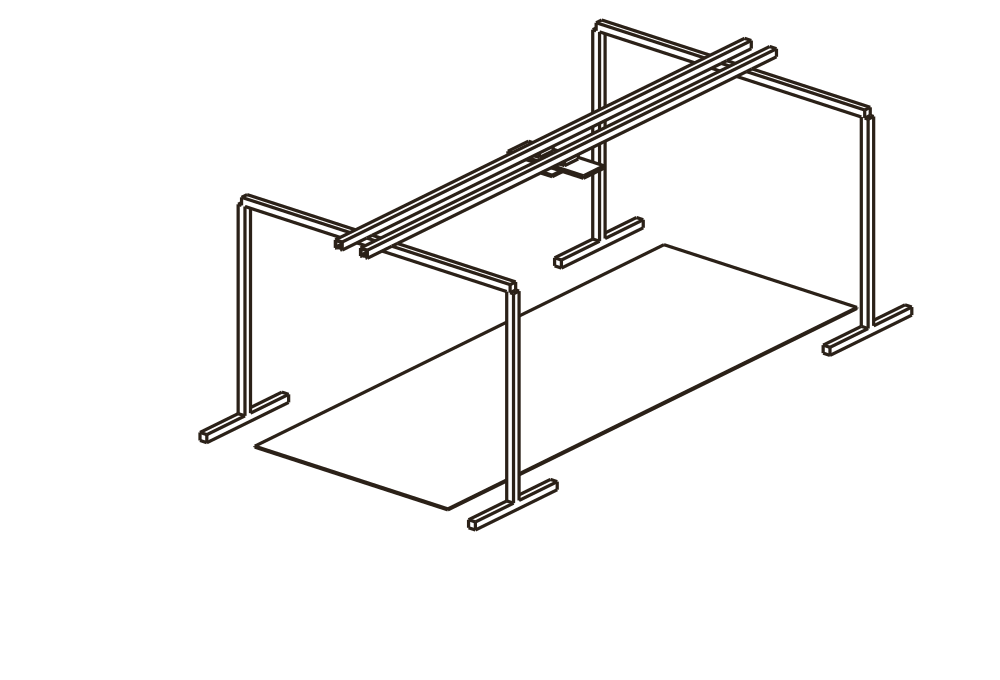 |
Complete scanner — line drawing (SVG) |
 |
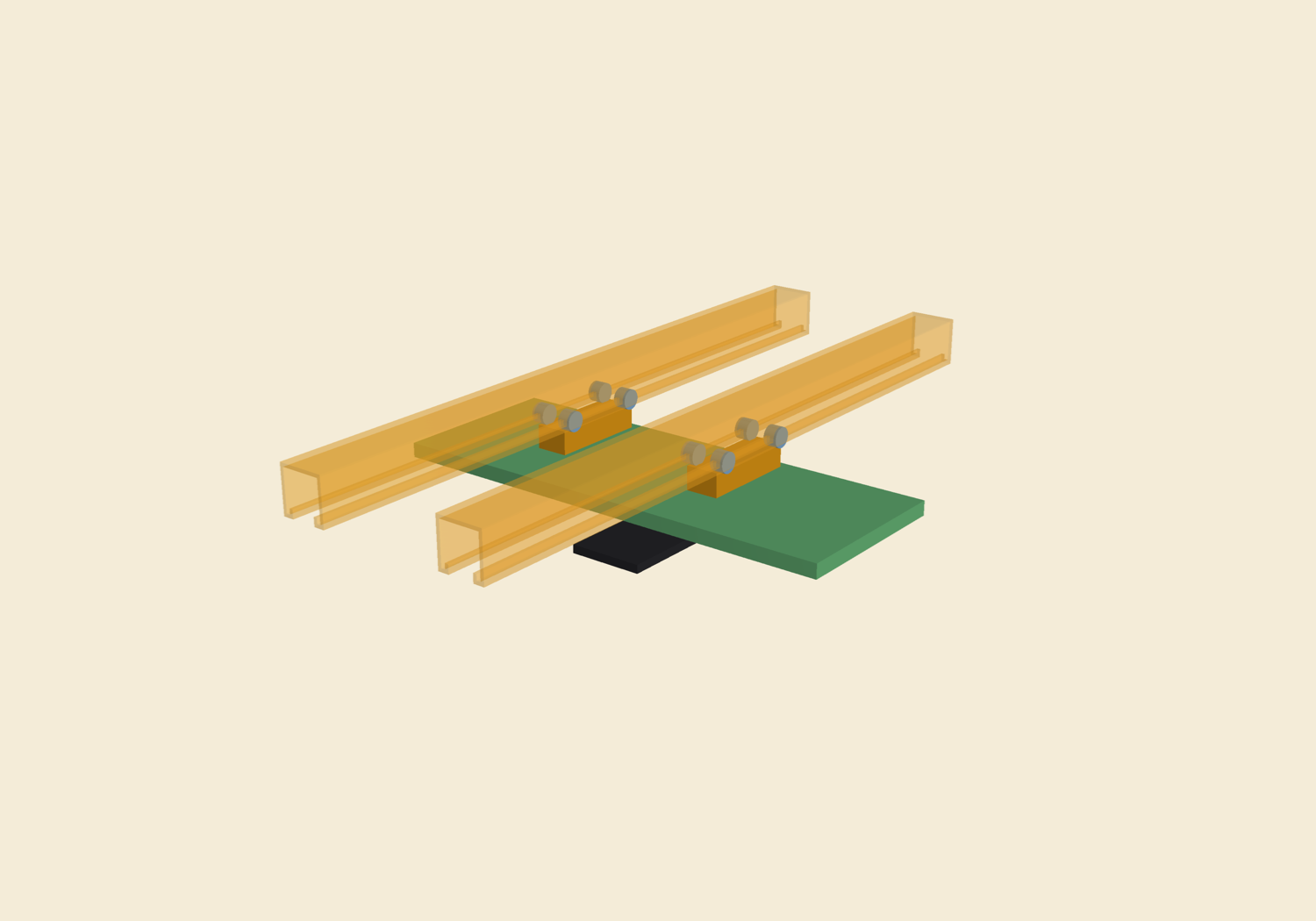
Carriage assembled under the rails, ghosted view (PNG) |
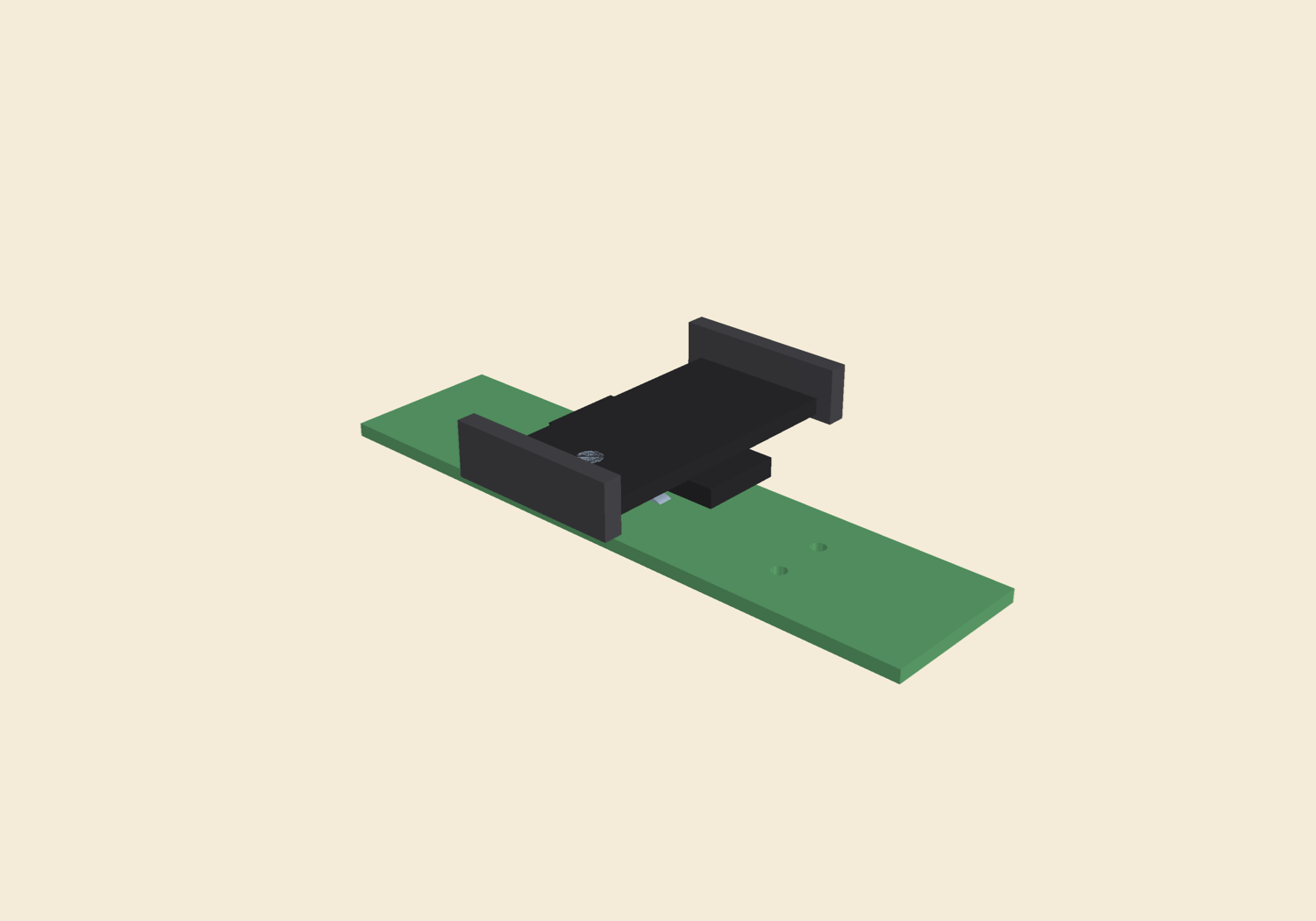 |
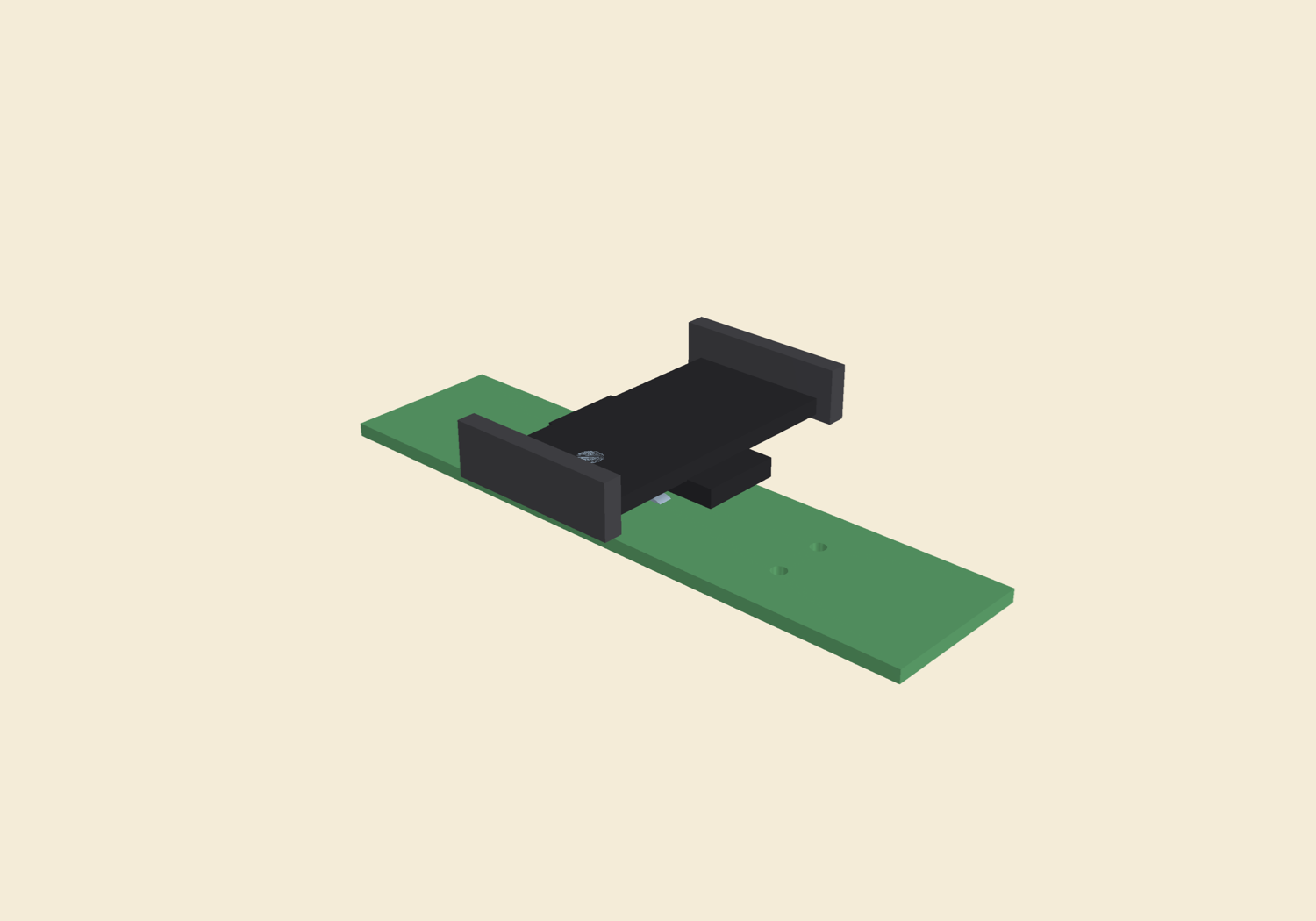
Camera mount assembly (PNG) |
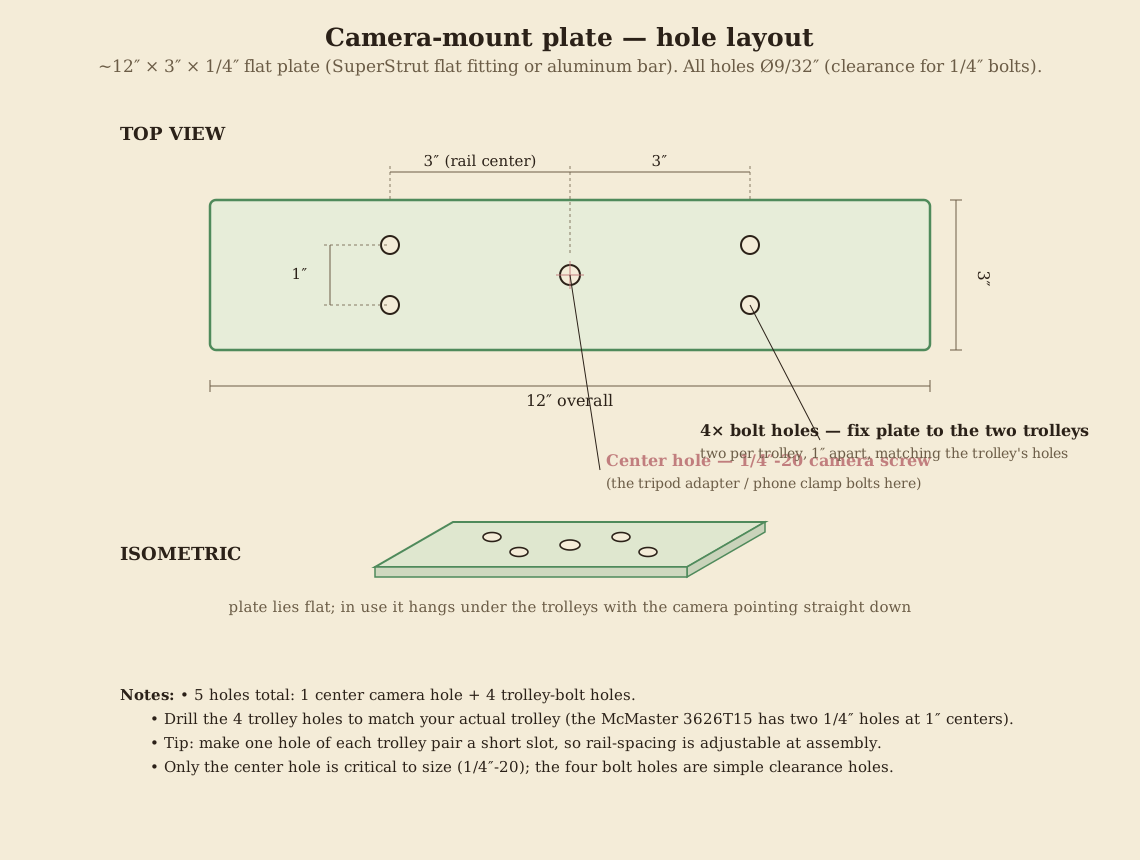 |
Camera-plate shop drawing — hole layout (SVG) — the one drawing you drill from |
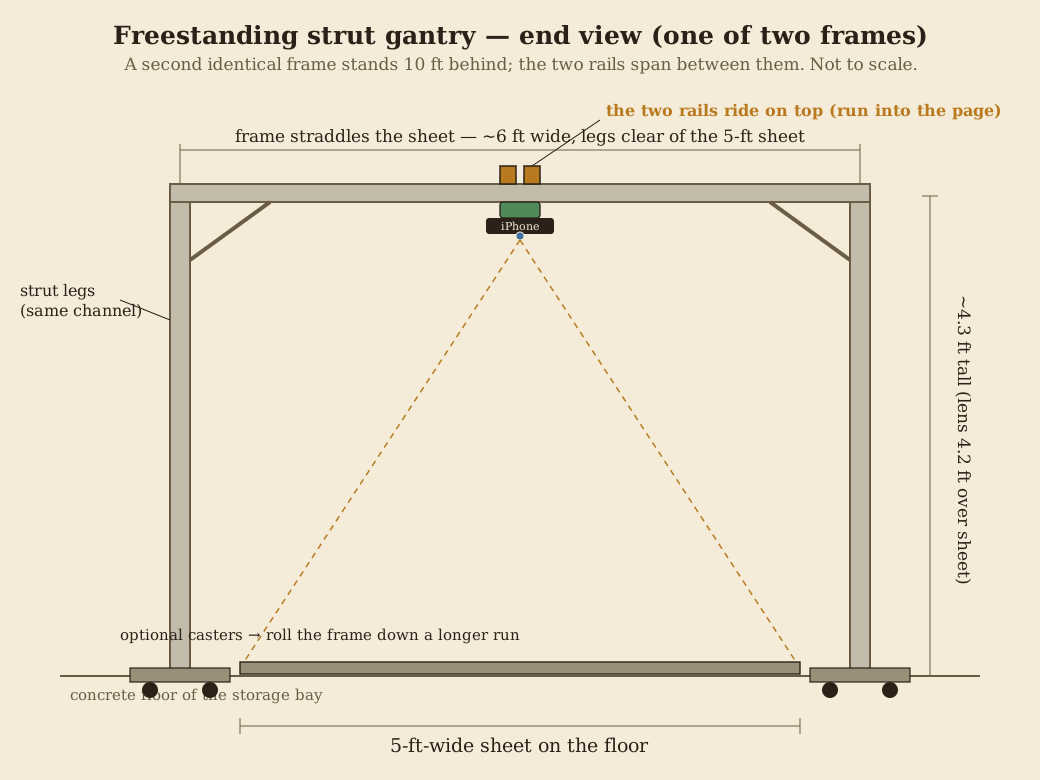 |
Freestanding gantry — end elevation (SVG) |
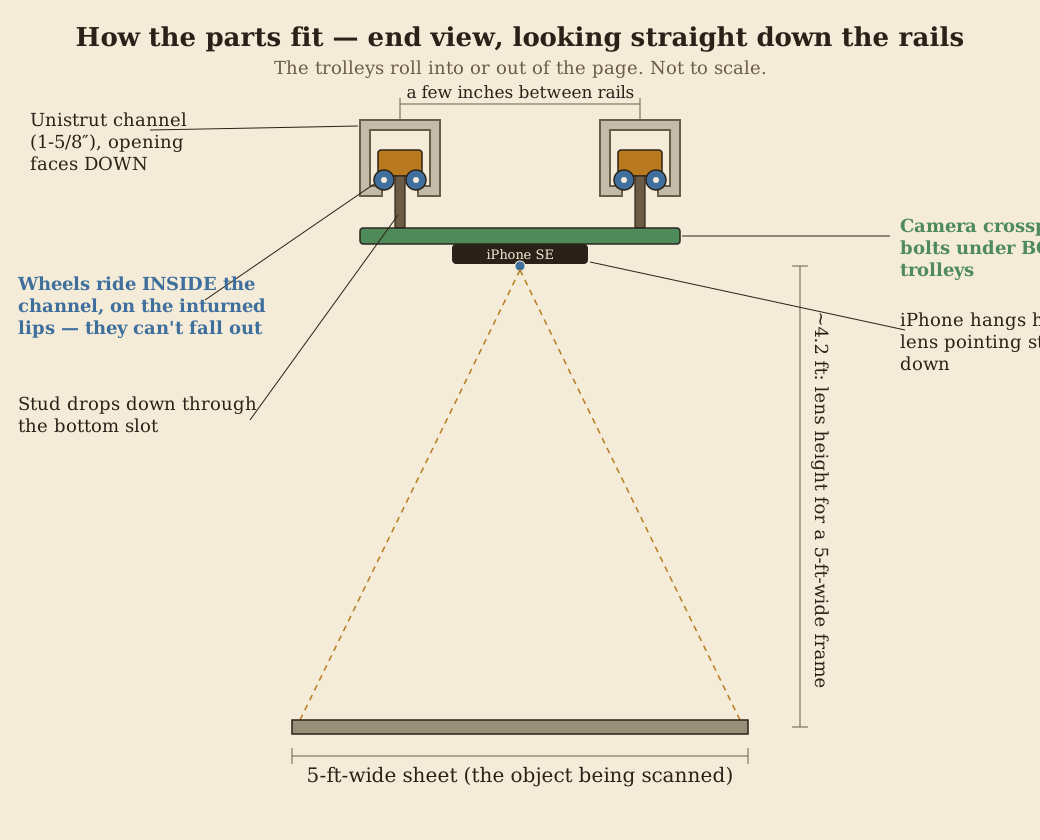 |
Rails & trolley — end-view cross-section (SVG) |
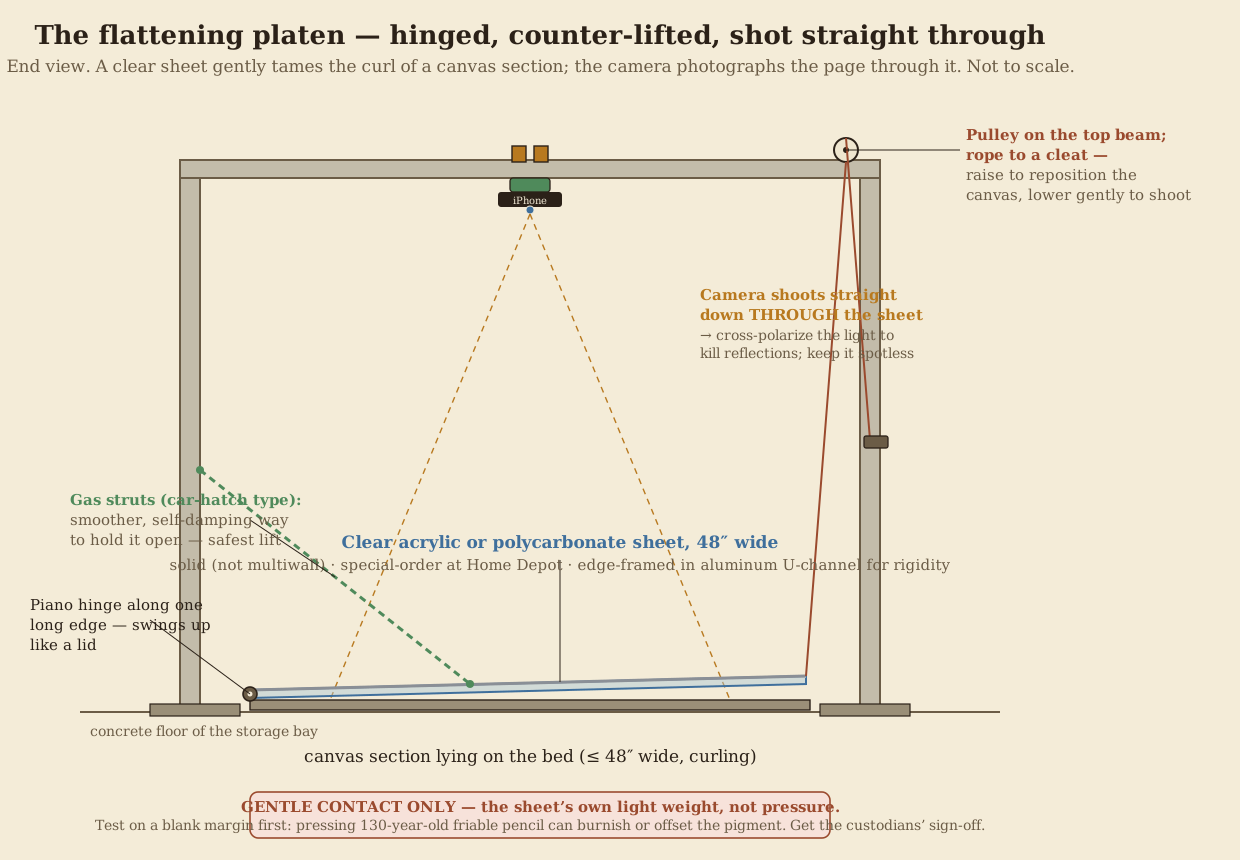 |
The hinged flattening platen (SVG) — gentle-contact flattening |
| CAD STEP + ZIP |
The complete CAD package (ZIP) — STEP models open in any CAD system, plus all drawings and documents |
Build documents
 |
Bill of materials (PDF) — every part off-the-shelf, no welding |
 |
Addendum: staging bed & registration (PDF) — the pegboard bed and the inch-marked tape that give the scan its coordinate system |
 |
Lighting & color-capture specification (PDF) — why color fidelity, not resolution, is the requirement: Dr. Owen’s six-color pencil markup is the primary data |
 |
Build sequence & next steps (PDF) |
What one photograph already reveals
Only one close-up photograph of the canvas surface has ever been published — in Dr. Groenewegen’s 2017 article. Even at web resolution it yields a probable identification: Folio layout, the head-title of Romeo and Juliet, plausibly the junction with Titus Andronicus, Dr. Owen’s colored underlines visible in the columns.
 |
Exhibit: the only known close-up of the canvas — analyzed (PDF) |
The Cryptographic Audit series
Five documents defining a falsifiable research program — with the decision criteria stated before any data, so the result is an audit rather than an argument.
 |
1 · The Dispersal Hypothesis (PDF) — the founding idea: Owen’s five volumes as the original narrative, dispersed across the Folio and dozens of other works |
 |
2 · The Source-Document Catalog (PDF) — the scan’s first deliverable: work, edition, page, line, and pencil color for every fragment on the canvas |
 |
3 · The Masks List as Candidate Corpus (PDF) — a cross-validation prediction connecting the canvas catalog to Barsi-Greene’s Hundred Masks |
 |
4 · The Method Compendium (PDF) — every surviving 1890s source on how the Word Cipher worked, including Millett’s self-demonstrating test case |
 |
5 · The Flow Asymmetry Audit — Methodology (PDF) — how AI-measured “flow” turns a 130-year argument into a test |
Prepared by Walter H. Wilkinson, Worland, Wyoming. Inquiries: [email protected]. Related exhibits: the Comparison of Baconian Cipher Methods and the Hundred Masks of Sir Francis Bacon; the reverse-engineering work itself lives at Experiment Eleven.